
Irish-Made Premium Camping Trailers & Roof Tents
Home / Do You Need a Special Licence to Tow a Camping Trailer?
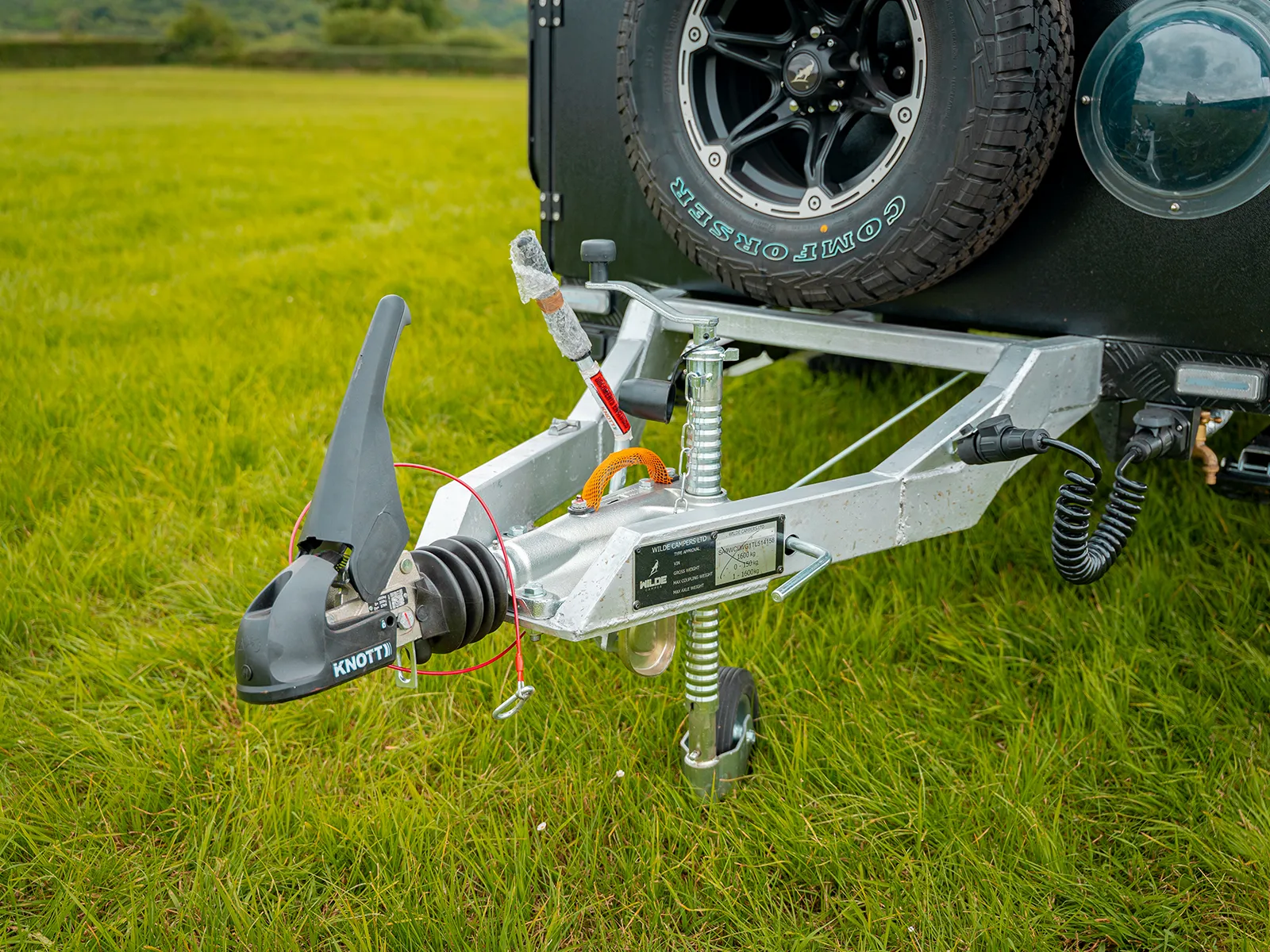
One of the most common questions when considering a camping trailer is: do I need a special licence to tow one?
The answer depends on a few things, including where your driving licence was issued, the Maximum Authorised Mass (MAM) of the camping trailer and, in some cases, the combined MAM of your vehicle and trailer.
For some lightweight camping trailers, you may already have everything you need on a standard Category B car licence. For larger trailers, an additional towing entitlement may be required.
In this article, we’ll explain the basics for drivers in Northern Ireland, Great Britain and the Republic of Ireland, as well as some of the other important weight limits to check before choosing a camping trailer.
Important: This article is intended as a general guide only and should not be considered legal advice. Driving licence and towing requirements can vary depending on your individual licence, vehicle and trailer, and regulations may change. Always check your driving licence entitlement, your vehicle manufacturer’s towing limits and the latest official government guidance before towing.
Before looking at driving licences, there’s one term you’ll see regularly when researching trailers: Maximum Authorised Mass, or MAM.
MAM is the maximum weight that a vehicle or trailer is legally permitted to weigh when fully loaded. You may also see this referred to as its maximum permissible weight or gross weight.
It’s important because it isn’t simply the empty weight of your camping trailer.
Your camping equipment, water, food, accessories and anything else carried in the trailer all contribute towards its actual loaded weight, while the trailer’s MAM sets the maximum permitted figure.
When checking your driving licence entitlement, it’s the MAM figures that are particularly important.
For drivers in Northern Ireland, a standard Category B car licence allows you to drive a vehicle up to 3,500kg MAM and tow:
If your vehicle and trailer combination falls outside the Category B limits, you will generally need Category B+E entitlement.
This is why the weight of a camping trailer can make a significant difference, particularly for drivers who don’t already hold B+E entitlement.
You can find full and up-to-date information on the NI Direct guidance for cars towing trailers and caravans.
Category B+E is the driving licence entitlement for a Category B vehicle towing a heavier trailer combination that falls outside the standard Category B limits.
In Northern Ireland, drivers who passed their car test before 1 January 1997 generally have broader existing towing entitlements. Drivers who passed from 1 January 1997 onwards may need to pass an additional practical B+E test to tow combinations outside their Category B entitlement.
Rather than relying solely on when you passed your test, it’s always worth checking the categories and restrictions shown on your own driving licence. NI Direct provides further information on driving licence requirements for towing a caravan or trailer.
The rules in Great Britain are different from those in Northern Ireland.
Changes introduced in December 2021 mean that drivers who passed their car driving test from 1 January 1997 can now tow a trailer with a MAM of up to 3,500kg, within the towing limits of their vehicle.
This is known as Category BE entitlement. If Category BE isn’t shown on the physical driving licence, DVLA adds it when the licence is next renewed.
Drivers who passed their car test before 1 January 1997 generally have broader existing towing entitlements, although individual licence details should always be checked.
You can check the latest requirements using the official GOV.UK guidance on towing with a car.
So, if you’re travelling from Northern Ireland to Great Britain, or buying a Wilde Camper in England, Scotland or Wales, it’s important to understand that the driving licence rules are not identical.
In the Republic of Ireland, a Category B licence generally allows you to tow:
For heavier combinations outside the Category B limits, Category BE entitlement may be required.
The National Driver Licence Service provides guidance on cars and trailers, including Category B and BE licence requirements.
Again, this makes the MAM of the camping trailer an important consideration when deciding which model is suitable for you.
If you’re based in Northern Ireland or the Republic of Ireland, you’ll notice that 750kg MAM appears frequently in the towing regulations.
A camping trailer with a MAM of 750kg or less can be towed within the standard Category B trailer entitlement, provided the towing vehicle and overall combination also meet the applicable legal requirements.
For someone who doesn’t have B+E entitlement, choosing a lightweight camping trailer can therefore make getting started considerably simpler.
This is one of the advantages of the Wilde One camping trailer.
With a MAM below the 750kg threshold, the Wilde One has been designed to offer the freedom of a fully equipped camping trailer while remaining within the standard Category B trailer allowance for drivers in Northern Ireland and the Republic of Ireland, subject to the towing limits of the vehicle being used.
That can make it particularly appealing to first-time camping trailer owners or anyone who wants a compact, lightweight setup without needing to move into a heavier trailer category.
It’s still essential to check that your own vehicle is approved to tow the trailer and that all applicable vehicle, licence and loading limits are observed.
Having the correct driving licence entitlement doesn’t automatically mean that your car can tow any trailer within that licence category.
Your vehicle has its own towing limits, and these must also be followed.
Before choosing a camping trailer, there are several figures worth checking.
Most vehicles have a maximum weight that they’re permitted to tow. You can usually find this in the vehicle handbook or manufacturer’s specification.
If your vehicle is rated to tow 1,500kg, for example, you cannot simply tow a 2,000kg trailer because your driving licence allows you to tow heavier trailers.
GOV.UK provides further information on towing weight and width limits, including how to check your vehicle’s gross train weight.
Your vehicle will also have a gross train weight. This is the maximum permitted weight of the fully loaded towing vehicle and fully loaded trailer combined.
This figure must not be exceeded.
Don’t forget about everything you add to your camping trailer.
Water, food, camping equipment, outdoor furniture, clothing, bikes and other accessories all add weight. The payload available on a trailer tells you how much you can carry while remaining within its MAM.
Nose weight is the downward force that the trailer places on the towball. Your vehicle, towbar and trailer can each have specified limits, so correct loading and weight distribution are important for safe and stable towing.
A useful way to think about it is to make three checks before choosing your trailer:
All three need to work together.
Trailer weight might not be the most exciting specification when you’re comparing kitchens, sleeping arrangements, solar systems and off-grid features, but it’s one of the most important.
It can affect:
It’s therefore worth checking weights and licence requirements early in the buying process rather than after you’ve chosen a particular camping trailer.
If you’re currently comparing your options, you can explore the full Wilde Camper range and compare the different camping trailers available.
Yes, in many cases. What you’re permitted to tow depends on your driving licence entitlement, where your licence was issued, the MAM of the trailer and potentially the combined MAM of the towing vehicle and trailer.
In Northern Ireland, a Category B vehicle can tow a trailer with a MAM of up to 750kg, with a combined vehicle and trailer MAM of up to 4,250kg. The Republic of Ireland also allows Category B licence holders to tow trailers with a MAM no greater than 750kg, subject to the applicable vehicle and towing requirements.
It depends on your existing licence entitlement and the vehicle and trailer combination you intend to tow. If your combination exceeds the limits permitted under Category B, B+E entitlement may be required. Check the latest NI Direct towing licence guidance for your individual circumstances.
The rules changed in Great Britain in December 2021. Drivers who passed their car test from 1 January 1997 can now tow trailers up to 3,500kg MAM within their vehicle’s towing limits. Drivers should still check their individual licence entitlement and vehicle limits using the official GOV.UK towing guidance.
Yes. Everything loaded into or onto your trailer contributes towards its actual laden weight. Your trailer must remain within its Maximum Authorised Mass.
The Wilde One has a MAM below 750kg, putting it within the standard Category B trailer threshold in Northern Ireland and the Republic of Ireland. Your towing vehicle must still be suitable for the trailer and comply with its own towing and weight limits.
Driving licence and towing rules can change, and your entitlement depends on your individual circumstances. For the latest information, always refer to the relevant official guidance:
Information in this article was reviewed against the above official guidance in September 2026.
Choosing a camping trailer isn’t only about how many people it sleeps or the features it has. Your vehicle, driving licence and the weight of the trailer all need to work together.
At Wilde Camper, we can help you understand the specifications of each model and find a camping trailer that suits the way you want to travel.
Explore the Wilde Camper range to compare our camping trailers, or get in touch with our team to discuss which model could be right for you.
I am interested in